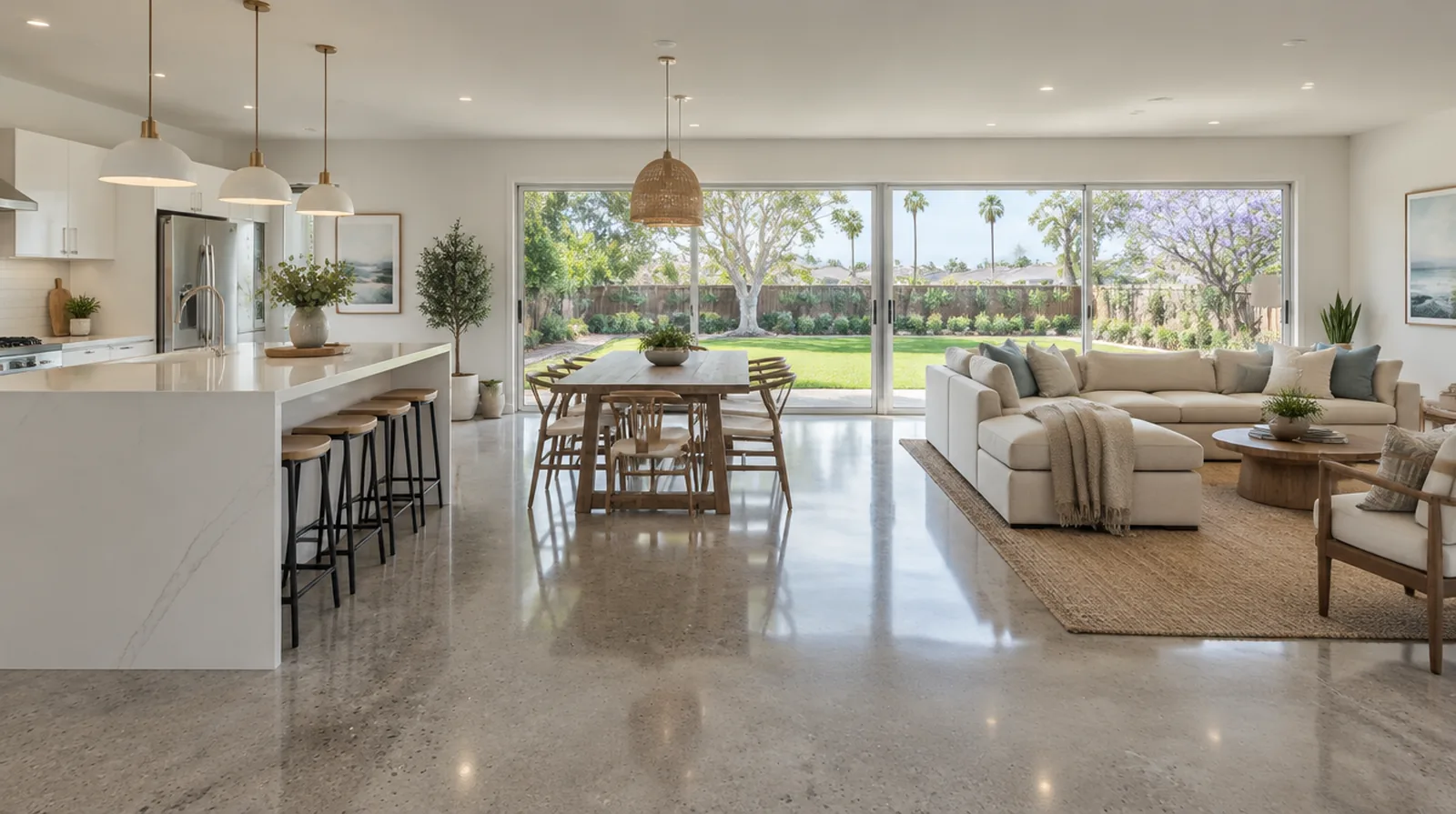
What polished concrete is
Polished concrete is not a coating. We grind the slab with progressively finer diamonds, apply a densifier that hardens the surface and polish it to the sheen you want. The result is a durable, reflective floor that will not peel because there is nothing on top to peel. A guard sealer adds stain resistance.
Remodels in older homes
Many homeowners here pull up worn carpet, old tile or vinyl during a remodel and find a sound slab underneath. Polishing that slab can be faster and more affordable than installing new flooring. It suits the clean, modern look many owners want when they open up a 1970s floor plan. Old tack strip holes, glue and paint spots can be ground out or filled, and some owners like the character of a few marks.
Choosing a look
Cream polish shows little aggregate and looks smooth and uniform. Salt and pepper exposes fine sand. Full aggregate grinding reveals the stones in the concrete. Sheen ranges from matte to high gloss. We test a small area so you can see how your slab responds before committing.
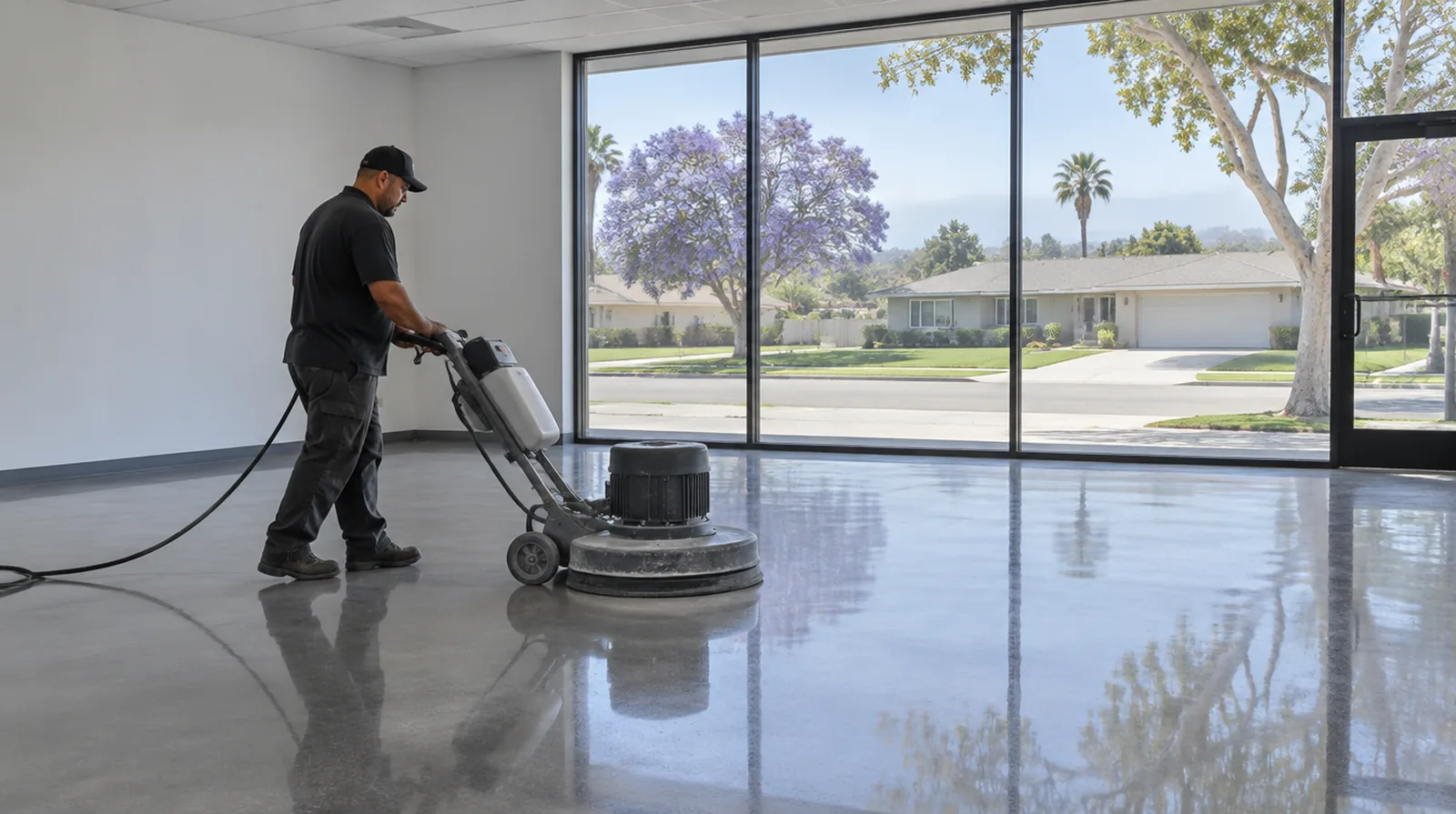
Businesses and offices
Retail stores, offices, showrooms and warehouses choose polished concrete because it handles heavy traffic, needs no waxing and lasts for decades. Bright, reflective floors also improve lighting and lower energy use. We work after hours to keep your business open.
Dyes and color
Dyes can add warm browns, soft grays or deep charcoal. They can be applied uniformly or in patterns, such as borders and scored squares. Dyes are tested first and sealed after polishing.
Moisture and polished floors
Because polished concrete is breathable, it handles moisture in the slab better than most coatings. That makes it a good option for homes on damp ground where a sealed coating would be at risk. Efflorescence can still appear in very wet slabs, so we evaluate each floor first.
Care
Dust mop daily in busy areas and wet clean with a pH-neutral cleaner. Wipe up acidic spills like wine, citrus and vinegar quickly. A maintenance burnish every year or two restores shine in high-traffic spaces.
Comfort
Concrete is hard and can feel cool. Area rugs add warmth and absorb sound. Polished concrete pairs well with radiant heat in remodels.
Questions
Can any slab be polished?
Most can. Badly damaged or very soft slabs may be better suited to a coating.
Is it slippery?
Polished concrete has good traction when dry. Keep it clean and dry for best grip.
How long does it take?
Typically two to four days for a home, depending on size and condition.
Curious about polishing your slab? Book a free test area.
Cost compared with new flooring
Because the slab is already there, polishing avoids the cost of buying and installing tile, wood or vinyl. It also never needs to be replaced as other floors wear out. The main variables are the condition of the concrete, how much aggregate you want exposed and how much patching is needed after old flooring comes up. We give you a clear written price after testing a small area, so there are no surprises once the work begins.
Offices and medical suites
Professional offices along the main boulevards often have carpet that wears out in walkways. Polished concrete removes that recurring replacement cost and is easy to keep clean, which makes it a strong choice for dental and medical suites where hygiene matters and for lobbies that see steady visitors.
Patios and covered outdoor rooms
Polished or ground and sealed concrete also works on covered patios and outdoor kitchens. We keep the sheen lower outside for traction and use a guard that handles sun and splashes. It is a clean, modern look that ties indoor and outdoor living spaces together when sliding doors are open on warm days.
Pet owners like polished floors too, since claws do not scratch them the way they mark wood, and accidents clean up easily.
Ask about polished concrete
Call (714) 942-1604 for a free estimate.