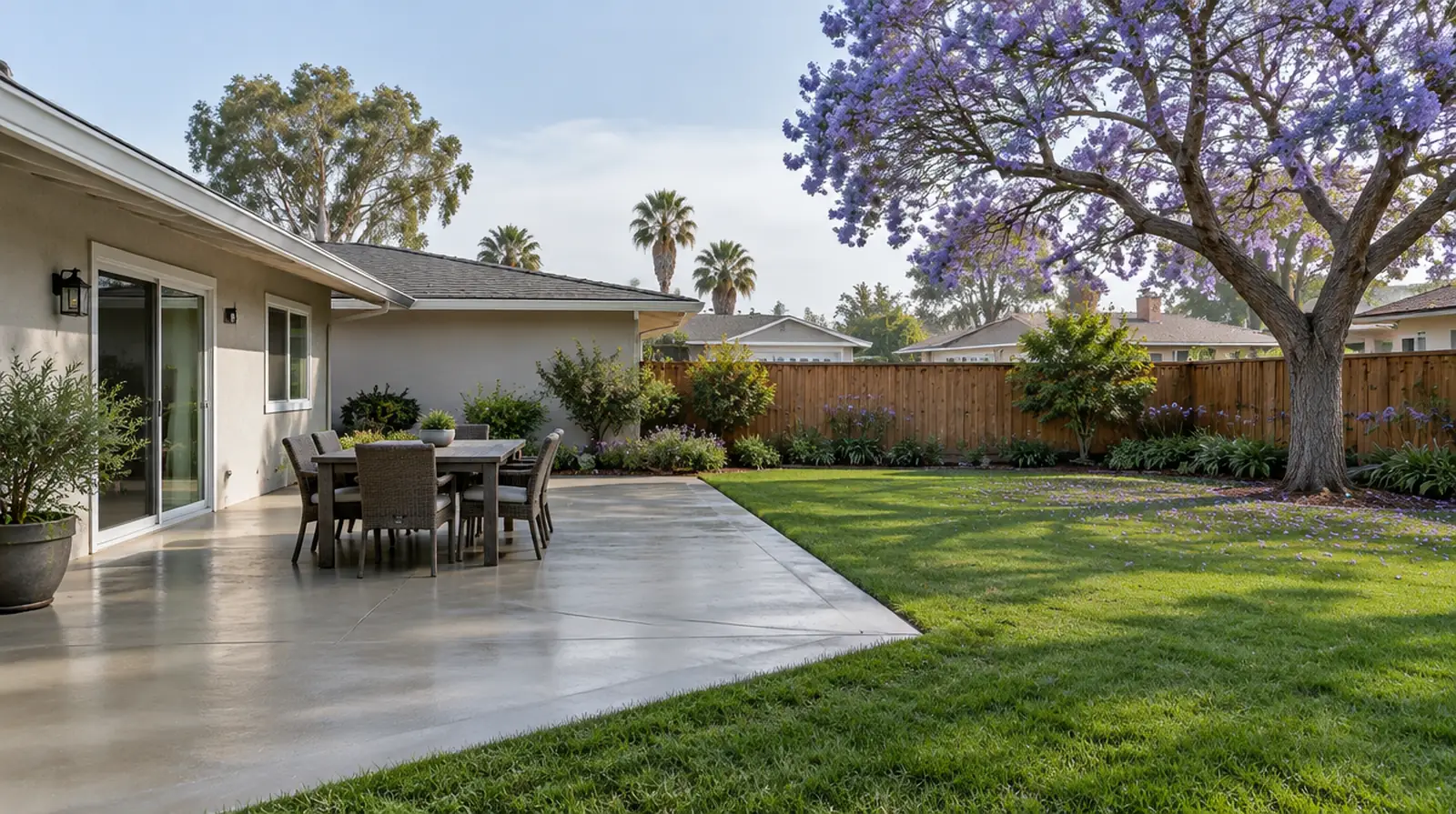
Why seal concrete here
Bare concrete is porous. It soaks up water, sprinkler overspray, oil, leaf tannins and salt carried on the ocean breeze. Over time that leads to stains, mildew in shady areas, white efflorescence and surface scaling. A good sealer slows water and stains from entering while letting the concrete breathe. In a damp coastal climate, that protection makes a visible difference.
Types of sealers
Penetrating sealers
Silane and siloxane sealers soak into the concrete and repel water without changing its look. They are ideal for driveways, walkways and pool decks where traction matters. They last many years.
Acrylic sealers
Acrylics form a thin film that enhances color and adds a light sheen. They suit stamped and colored patios. They need recoating every few years.
Urethane and epoxy sealers
For garages and interior floors, clear urethane or epoxy sealers add stronger protection against oil and chemicals.
Our process
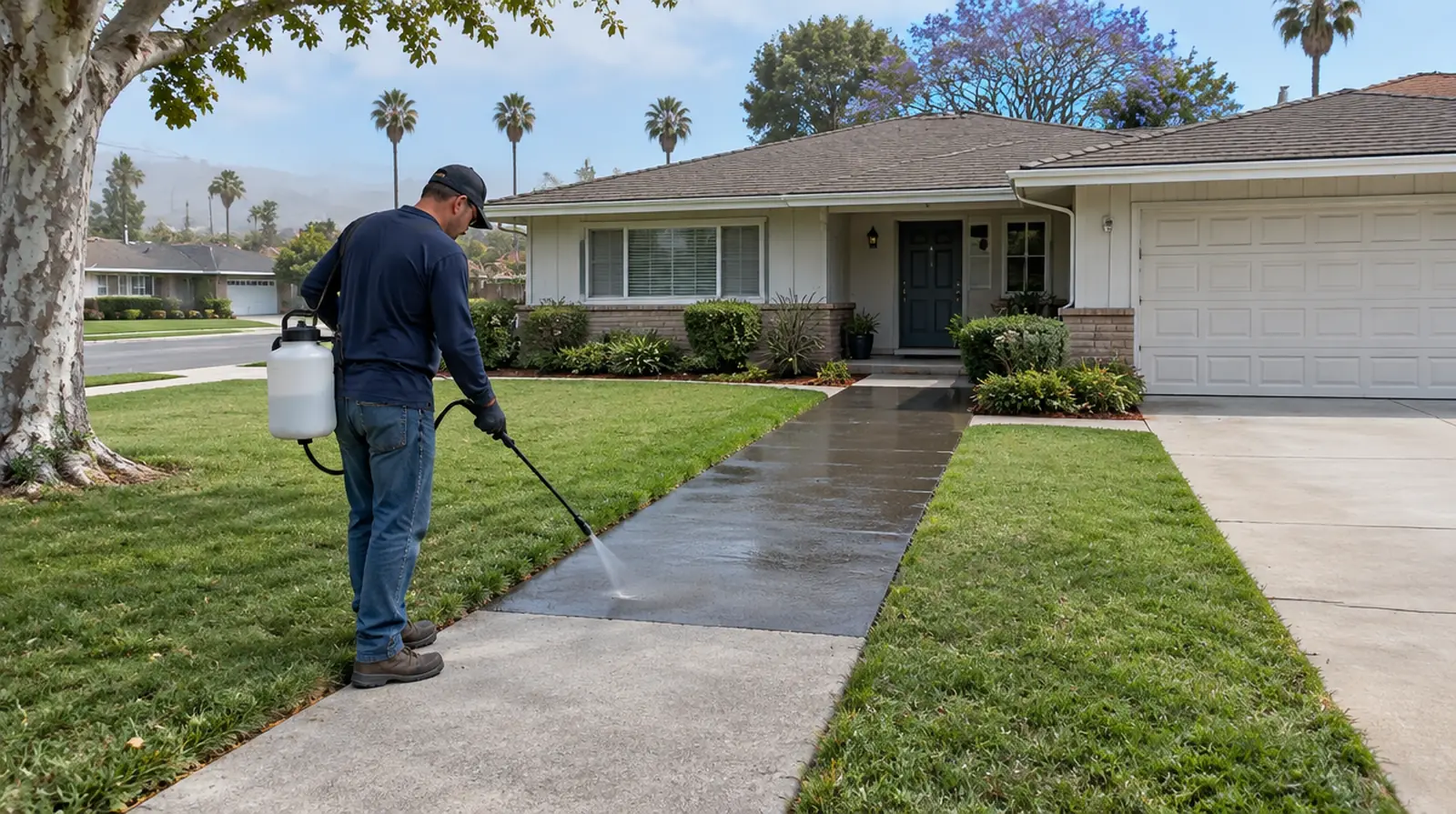
We clean the concrete thoroughly with pressure washing and degreasers, treat mildew and efflorescence and let the surface dry. Cracks are filled where needed. Then we apply the sealer with sprayers or rollers in even coats. Film sealers on walking surfaces get a grit additive for traction.
Pool decks and shady yards
Pool decks deal with chlorine, splashing and bare feet. Shady side yards under mature trees stay damp and grow moss and mildew. We choose sealers that handle these conditions and keep surfaces cooler and safer.
Stamped and colored concrete
Stamped patios fade and dull over time. Cleaning and resealing restores the color and depth. We remove old, cloudy sealer when needed before applying a fresh coat.
How often to reseal
Penetrating sealers last five to ten years. Acrylic films need refreshing every two to three years, sooner in full sun or heavy traffic. We will recommend a schedule for each surface.
Questions
Will sealer make concrete slippery?
Film sealers can. We add grit to walking surfaces.
Can you seal new concrete?
Yes, after it cures, usually about a month.
Does sealer stop cracks?
No, but it reduces water damage that makes cracks worse.
Protect your concrete. Book a sealing estimate.
Efflorescence and white haze
White, powdery deposits on patios and walks are efflorescence: salts carried up by moisture and left behind when water evaporates. They are common on damp ground like ours. We clean them with a mild acid wash or a specialty cleaner, rinse well and seal with a breathable product so moisture can escape without leaving new deposits. Sealing over efflorescence without cleaning traps the haze under a film and makes it look worse.
Garage floors that only need sealing
Not every garage needs a full coating. If your slab is in decent shape and you mostly want dust control and stain resistance, a clear penetrating or urethane sealer may be enough. It costs less, goes on quickly and keeps the natural concrete look. We will tell you honestly when that simpler option fits.
Entry walks and porches
Front walks and porches are among the most visible concrete on a home. Sealing them keeps leaf and berry stains from setting in under the big shade trees that line many streets.
Choosing between clear and tinted
A clear sealer keeps the existing color, while a tinted sealer can even out patched or mismatched sections of a patio where new concrete meets old. Tints come in grays, tans and earth tones and are applied in thin coats so the texture still shows. They are a budget-friendly way to make a pieced-together backyard look unified. We test the tint on a hidden corner before coating the whole area.
Timing around weather
We seal when the concrete is dry and fog has lifted, usually from late morning into afternoon. Sealer needs a few dry hours to set, so we watch the forecast for rain and heavy marine layer before scheduling.
Pet owners appreciate sealed patios too, since accidents and muddy paw prints rinse away without soaking into the concrete.
Schedule concrete sealing
Call (714) 942-1604 for a free estimate.