What makes a metallic floor
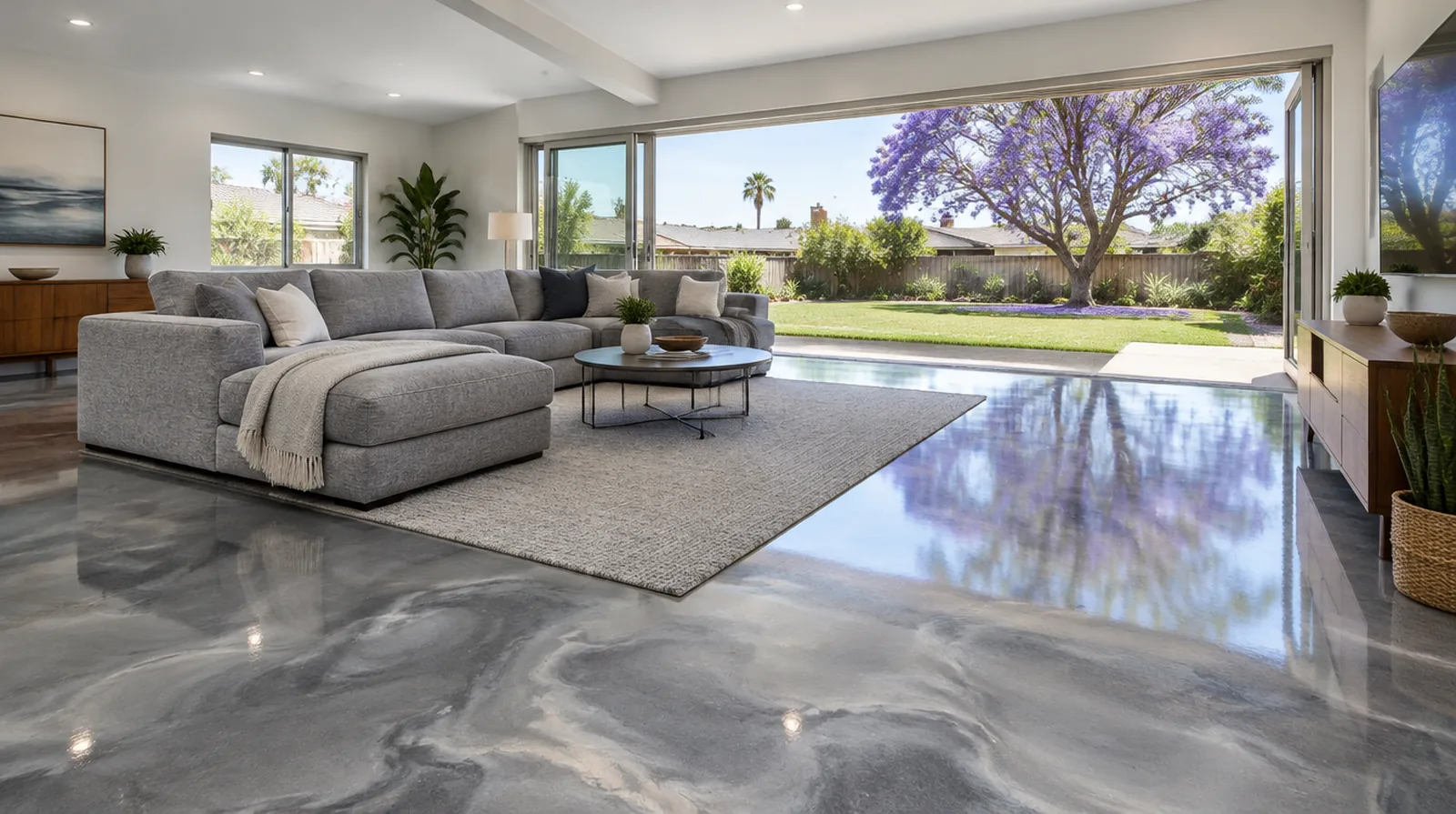
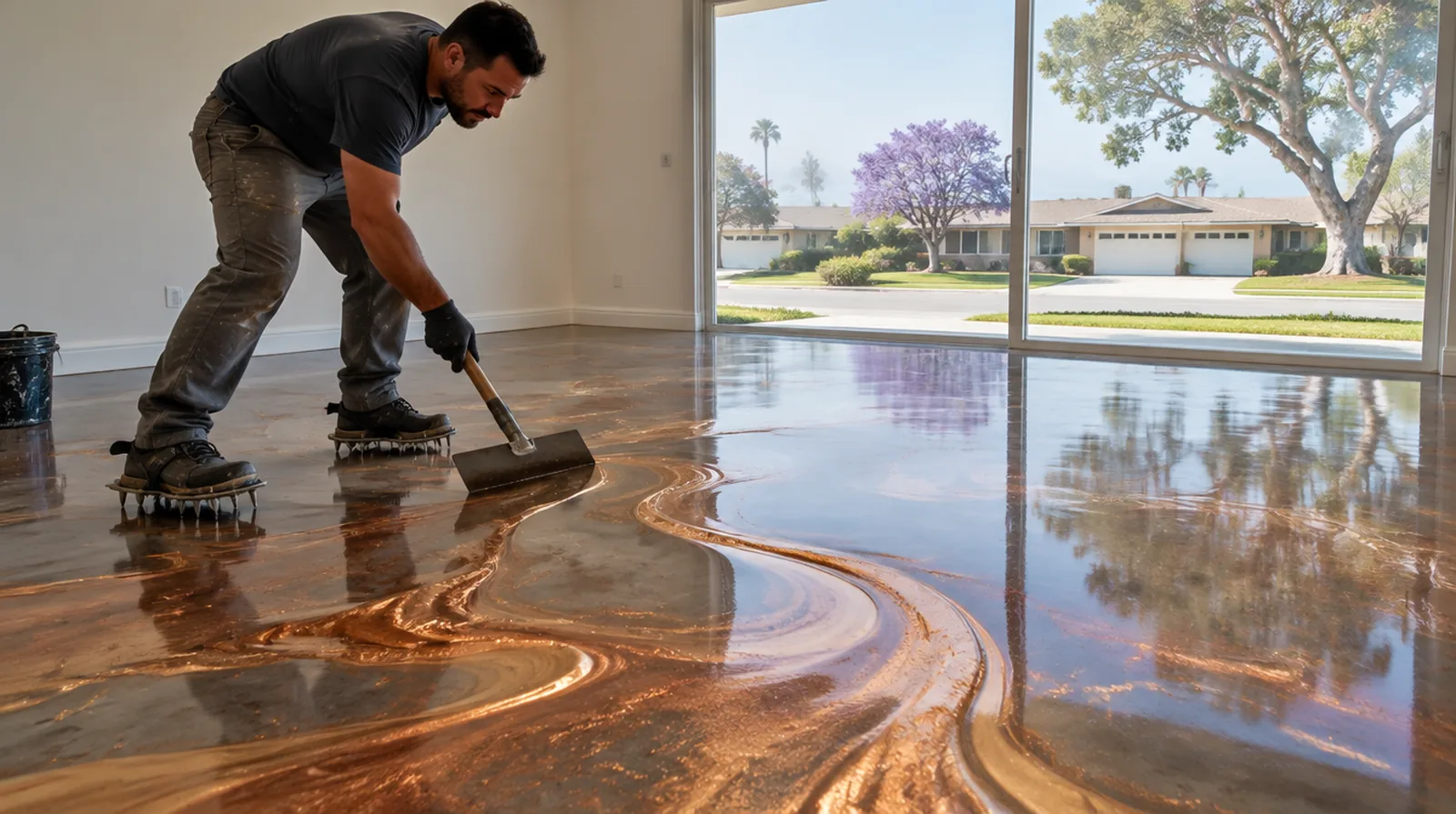
Metallic epoxy uses mica pigments mixed into clear resin. As the installer works the wet floor with rollers, trowels and sprayers, the pigments shift and catch the light, creating swirls, ripples and a three-dimensional depth that can look like polished stone, moving water or brushed metal. Each floor is hand-worked, so every result is one of a kind.
Popular spaces in local homes
Many ranch homes here have converted part or all of the garage into a family room, home office or guest suite. Others have a sunken den or a large great room facing the backyard. Those spaces suit metallic floors perfectly. The finish is seamless, warm underfoot with a rug, and dramatic in rooms with sliding doors that let in afternoon light. Home bars, game rooms and home theaters are also popular choices.
Businesses
Salons, boutiques, car showrooms, dental offices and restaurants use metallic floors to make an impression. The surface stands up to foot traffic and rolling chairs and cleans easily, while giving customers something memorable to look at.
Colors and styles
Silver and charcoal create a cool, modern marble look. Copper, bronze and gold feel warm and pair well with wood furniture. Blues and teals suggest the nearby ocean and work in beach-inspired rooms. We can combine two or three colors and control how much movement you see, from subtle and calm to bold and swirling. Sample boards and photos of past floors help you decide.
Preparing the slab
Metallic floors magnify every flaw underneath, so prep is critical. We test moisture, grind the slab, fill cracks and level low spots. Interior slabs in older homes sometimes have old carpet glue or tile mastic, which we remove completely. Converted garages often have a step down or a slope toward the old door, which we can address with self-leveling underlayment before the pour.
The pour
After a primer and a tinted base coat, we pour the metallic layer and work it while it is wet. Timing and technique decide the final look, which is why experience matters more here than with any other coating. Once it cures, we add a clear topcoat in gloss or satin. Satin hides fine scratches, while gloss gives the deepest shine.
Living with a metallic floor
Use felt pads on furniture legs, put mats at doorways and dust mop regularly. Grit is the main enemy of any glossy floor, so keeping sand and dirt off it keeps the finish looking new. A worn topcoat can be lightly sanded and recoated in a day, without redoing the metallic layer.
Comfort and sound
Epoxy is a hard surface. Area rugs add warmth and soften sound in living rooms and bedrooms. Because the floor is seamless, it works well with radiant heating mats under rugs and is a good option for anyone with allergies, since there is no carpet to trap dust.
Questions
How long does a metallic floor take?
Usually three to four days, including prep and topcoat.
Can I see my exact pattern first?
We show samples, but the final floor is unique and hand-worked.
Is it durable?
Yes, with a good topcoat and normal care it lasts many years.
Ready for a one-of-a-kind floor? Schedule a free consultation.
Converted garages and additions
When a garage becomes living space, the old slab usually slopes toward the door and may sit lower than the house floor. We level it with self-leveling underlayment, address moisture with a vapor primer and then pour the metallic system. The result is a continuous floor that makes the conversion feel like original living space rather than an afterthought.
Lighting and sheen
Metallic floors change with light. Sliding glass doors, skylights and recessed fixtures all affect how much shimmer you see. We look at your lighting during the estimate and suggest a sheen that shows off the pattern without too much glare.
Plan your metallic floor
Call (714) 942-1604 for a free estimate.